Understanding Cosmetic Dentistry
An inspiring guide to modern cosmetic dentistry and porcelain veneers: How ultra-conservative dental artistry transforms chips, gaps, and stains while preserving 95%+ natural enamel.
When people hear 'cosmetic dentistry' or 'veneers', they often worry about outdated horror stories where healthy teeth were aggressively ground down to tiny pegs. In modern biomimetic dentistry, that aggressive approach is completely obsolete.
Today's aesthetic smile design is rooted in extreme tooth conservation. Ultra-thin porcelain veneers (often as thin as a contact lens, between 0.3mm and 0.5mm) or direct composite artistry require little to no removal of your natural enamel. Instead of replacing your tooth, we simply overlay a handcrafted glass-ceramic shield that permanently corrects chips, closes gaps, masks deep internal discoloration, and creates symmetrical facial harmony. Your natural teeth remain strong, alive, and healthy underneath.
Ultra-Thin Veneers & Facial Smile Geometry
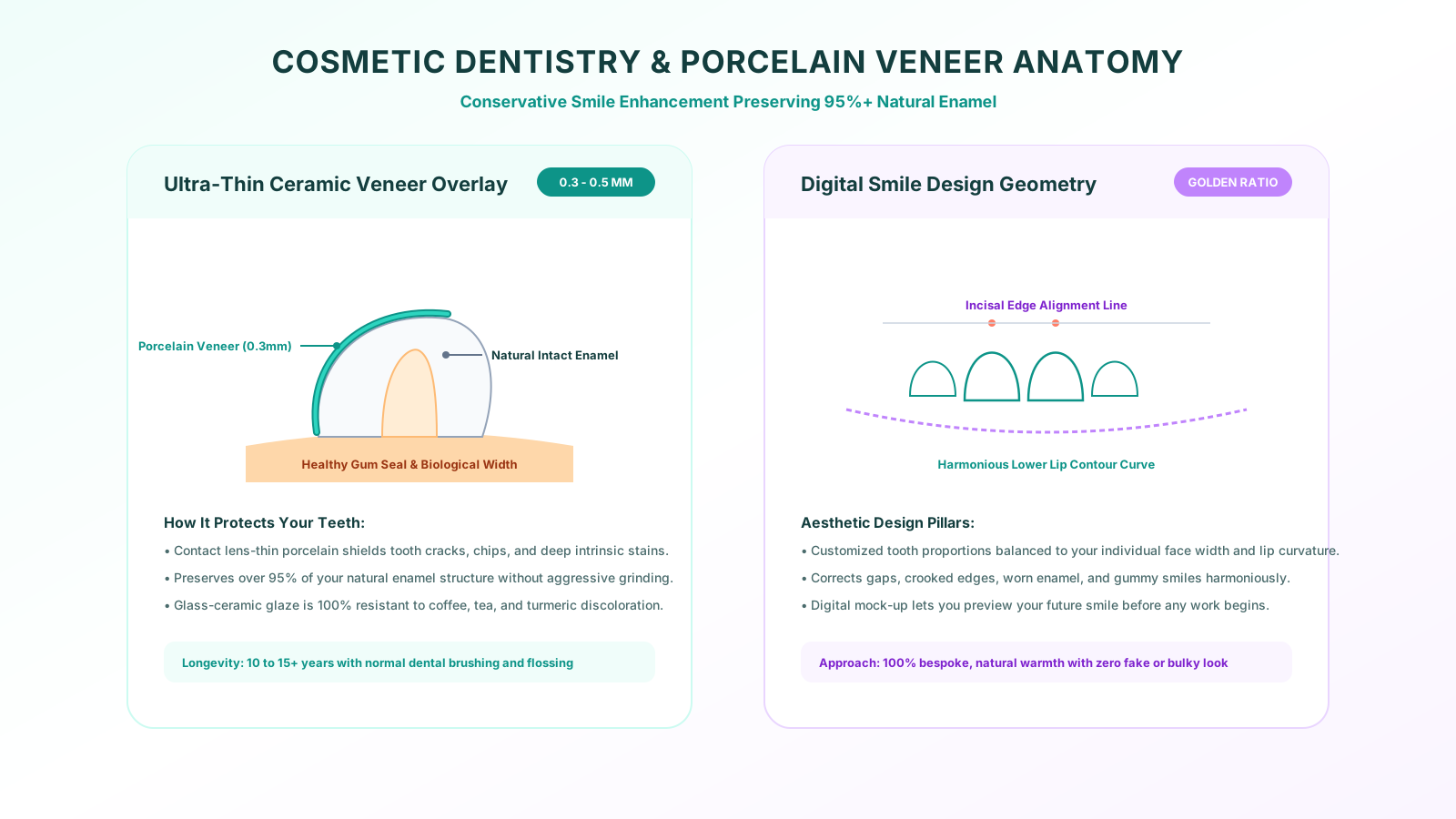
Figure 1: Cosmetic veneer and smile design anatomy: Contact lens-thin porcelain veneer (0.3mm) bonded to front enamel surface while preserving living pulp and natural dentin, designed along the natural curvature of your lower smile line.
Lithium Disilicate (E-Max) Ceramic
Aesthetic Porcelain ShieldHigh-strength glass ceramic with optical translucency and light refraction matching natural enamel. It will never absorb coffee or turmeric stains.
Intact Natural Enamel (95%+ Preserved)
Biological FoundationModern micro-prep preserves nearly all outer enamel, creating a molecular bond with resin cement that is as strong as an intact natural tooth.
Resin Bonding Layer
Permanent Molecular GlueAdvanced light-cured adhesive that fuses porcelain to enamel prisms at the microscopic level, preventing bacteria or moisture from penetrating.
Gingival Zeniths & Smile Arc
Facial SymmetryThe highest points of the gumline (zeniths) are balanced to follow your lip line, creating a harmonious, radiant, and youthful appearance.
When Is It Time to See a Doctor?
Cosmetic dentistry combines clinical science with facial aesthetics. You are an ideal candidate if you want to address:
Chipped or Worn Front Tooth Edges
Chipped enamel can catch your lip, feel rough to your tongue, and expose softer dentin underneath to rapid wear.
Persistent Deep Discoloration (Fluorosis/Tetracycline)
Intrinsic stains within the tooth structure cannot be bleached out. Ultra-thin veneers permanently mask discoloration with luminous natural enamel tones.
Unwanted Gaps Between Front Teeth (Diastema)
Composite bonding or porcelain veneers close center gaps in just 1 to 2 appointments without needing months of orthodontic braces.
Slightly Crooked or Irregularly Shaped Teeth
Aesthetic veneers create the appearance of perfectly straight, uniform teeth, often referred to as 'instant orthodontics'.
Uneven or Gummy Smile Line
Gentle laser gum contouring combined with aesthetic veneers creates a balanced, proportionate frame for your smile.
Why Choose Conservative Porcelain Veneers?
A healthy, attractive smile enhances personal expression, social ease, and professional presence. Here is why modern conservative veneers are the gold standard.
Preserving natural tooth vitality while achieving flawless smile symmetry:
- Preserves over 95% of your natural enamel structure without aggressive grinding
- Stain-resistant glass-ceramic glaze permanently resists coffee, tea, and turmeric
- Custom-crafted to your facial proportions, lip line, and skin tone for natural warmth
- Durable, lifelike strength that lasts 10 to 15+ years with normal dental care
Risks of non-conservative dentistry or postponing chip/wear repairs:
- Aggressive full-crown prep removes up to 60-70% of healthy tooth structure needlessly
- Unaddressed enamel cracks and chips propagate deeper under daily chewing forces
- Exposed dentin wears down 7x faster than enamel, leading to nerve sensitivity
- Habitual closed-mouth smiling can unconsciously diminish your personal confidence
Delaying repair of chipped or cracked front teeth allows daily chewing forces to propagate hairline fractures deeper into the tooth, eventually necessitating root canals or full crowns.
What Happens During the Procedure?
Our smile makeover journey is collaborative, artistic, and entirely transparent at every step:
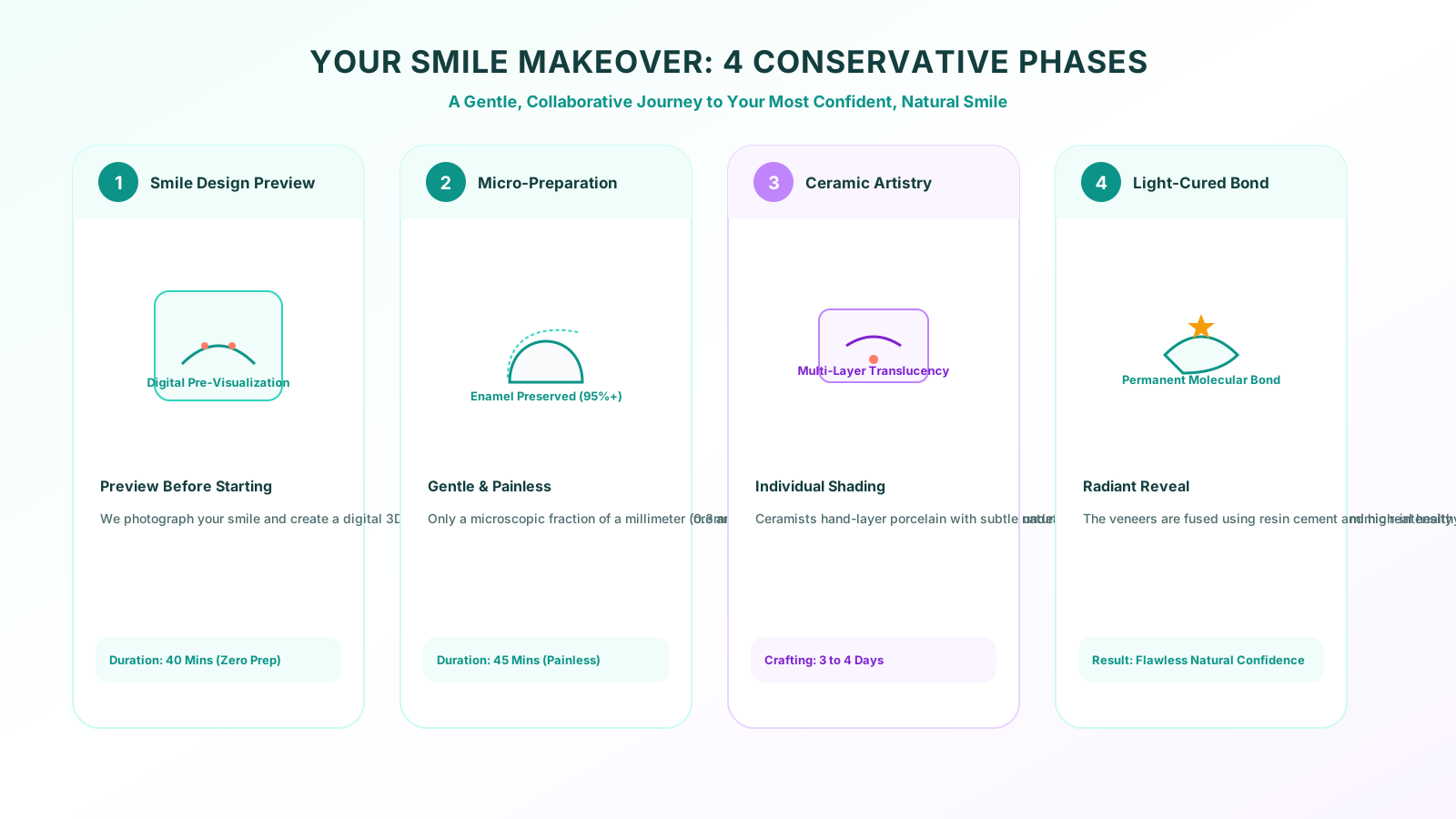
Figure 2: The 4 gentle phases of modern smile design: 3D digital smile design preview, micro-conservative enamel preparation, master ceramist artistry, and permanent light-cured bonding.
Digital Smile Design Consultation
Fun and creative! We take facial photographs, digital 3D scans, and discuss your smile goals.
We analyze your facial symmetry, lip dynamics, and tooth proportions to craft a 3D digital preview of your ideal smile before touching a tooth.
Micro-Conservative Enamel Preparation
Completely numb and gentle. You only hear light water mist and humming vibrations.
We smooth a micro-fraction of a millimeter (0.3mm to 0.5mm) of front enamel under localized numbing to create an invisible edge margin for the porcelain.
Master Ceramist Hand-Sculpting
Relaxing at home while wearing comfortable, aesthetic temporary veneers.
Our specialized aesthetic ceramist hand-layers multi-translucent porcelain, adding subtle natural incisal halos that reflect light like real enamel.
Seamless Light-Cured Bonding Reveal
Pure joy! Looking in the mirror and seeing your radiant, flawless natural smile.
Veneers are tried on for your approval, then bonded permanently to your enamel using resin cement and high-intensity blue curing light.
Smile Design Formats: Porcelain Veneers vs Bonding
Porcelain / E-Max Ceramic Veneers
Handcrafted glass-ceramic veneers offering the ultimate in lifelike depth, durability, and permanent stain resistance (10–15+ years).
Direct Composite Bonding & Contouring
Artistic layering of microscopic tooth-colored resin sculpted directly onto teeth in a single visit with zero enamel preparation.
Does It Hurt? The Honest Truth About Pain
The Origin of the Myth
Cosmetic dental procedures are virtually painless. Direct composite bonding requires zero anesthesia. Porcelain veneer micro-preparation is performed under light local numbing, ensuring you feel no sensitivity or sharpness. There is zero downtime after your appointment.
Our Painless Anesthesia Approach
Gentle localized comfort numbing during enamel micro-smoothing; zero needles required for composite bonding.
45 minutes per visit.
Immediate return to social and professional life. Gums adapt to the smooth porcelain margin within 24 to 48 hours.
Veneer Aftercare & Smile Protection
How to care for your new handcrafted smile so it remains radiant for 10–15+ years.
Immediate Priorities for the First 24 Hours
What to Eat Comfortably
- Normal healthy meals: delicious rotis, pastas, fresh vegetables, and rice
- Enjoy your morning tea, coffee, and turmeric curries freely — porcelain veneers NEVER stain!
- Crisp fruits like apples and pears sliced into wedges rather than bitten into directly with front teeth
- Plenty of water to keep your mouth fresh and healthy
What to Avoid for Now
- Biting directly into hard bones or unpopped popcorn kernels with front teeth
- Chewing on ice cubes, metal pens, or fingernails
- Extremely abrasive whitening toothpastes containing baking soda (use gentle gels instead)
- Opening bottle caps or tearing clothes tags with your teeth
Normal Sensations to Expect
- ✓Your new smile looking breathtakingly natural and feeling glassy-smooth to your tongue
- ✓Mild gumline sensitivity for 24 hours that resolves as gums settle around the porcelain margin
- ✓An immediate surge in personal confidence and smiling openly in photos
When to Reach Out to Us
- !Your bite feels slightly high or uneven when chewing on back teeth
- !A veneer edge feels rough to your tongue (polished smooth in 1 minute)
- !Any questions regarding your nightguard or maintenance routine
A Note from Dr. Pooja
Chief Dental Surgeon
“True cosmetic dentistry should never look like 'fake white chiclets'. Our philosophy is focused on enhancing your natural beauty — crafting a smile that looks vibrant, warm, and distinctly yours. We listen to what you want to change, respect your natural tooth structure, and ensure the entire process is a joyful, collaborative experience.”