
Understanding Dental Implants
A reassuring, authoritative guide to dental implants: How biocompatible titanium roots permanently restore missing teeth, preserve your jawbone, and feel 100% natural.
Losing a permanent tooth — whether from past trauma, deep decay, or severe fracture — can feel disheartening. Historically, the only solutions were removable plastic dentures that clicked and slipped, or cutting down healthy neighboring teeth to anchor a dental bridge.
A dental implant is the closest modern science has come to growing a brand-new natural tooth. Made of biocompatible medical-grade titanium (the exact same metal trusted for orthopedic joint replacements for over 50 years), the implant acts as a prosthetic root placed securely into your jawbone. Living bone naturally fuses with the titanium threads in a wonder of biology called osseointegration. Topped with a custom zirconia crown, your implant looks, cleans, and chews just like the tooth you were born with.
Osseointegration: Titanium & Bone Foundation
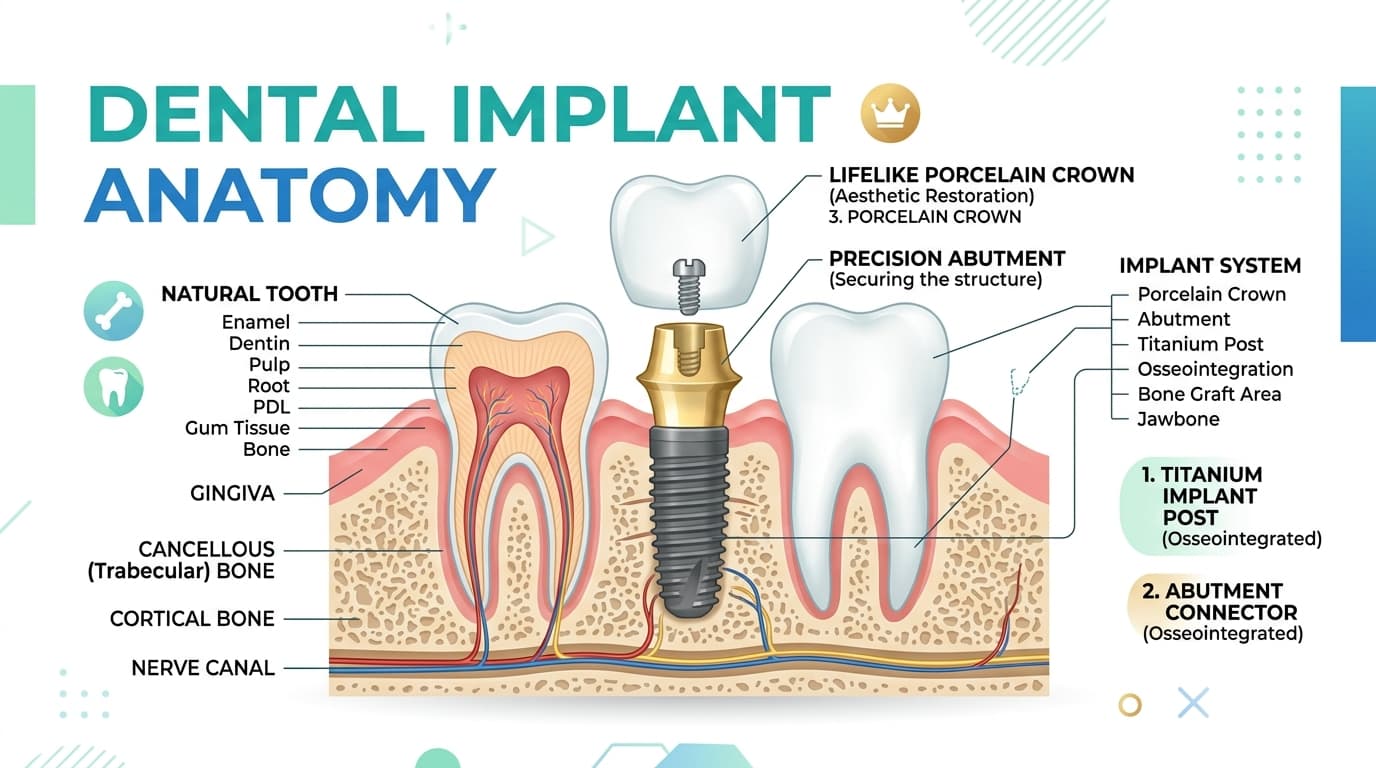
Figure 1: The anatomy of a permanent dental implant: Grade-IV titanium implant post integrated into alveolar bone, a precision titanium/zirconia abutment connector, and a handcrafted lifelike porcelain crown that matches adjacent natural teeth.
Titanium Implant Post (Root)
Artificial Biological RootSurgically positioned in the jawbone. Micro-textured titanium surfaces stimulate bone-forming cells to integrate securely with zero allergic rejection.
Precision Abutment
Internal ConnectorA custom precision collar that fastens into the implant post and emerges through the gumline to provide an anchor for the crown.
Restorative Porcelain/Zirconia Crown
Aesthetic & Chewing SurfaceHigh-strength ceramic sculpted to match the exact shade, contours, and chewing grooves of your neighboring natural teeth.
Cancellous & Cortical Jawbone
Natural FoundationImplants provide physiological chewing stimulation to the jawbone, permanently preventing the sunken bone resorption that occurs after tooth extraction.
When Is It Time to See a Doctor?
A missing tooth is not merely a gap in your smile — it is a biological disruption that affects your entire bite. An implant evaluation is recommended if:
Single or Multiple Missing Teeth
Leaving a gap causes adjacent teeth to drift, tilt into the empty space, and the opposing tooth to over-erupt, throwing your entire bite out of balance.
Loose, Uncomfortable Removable Dentures
Implant-supported overdentures or fixed full-arch bridges lock prosthetics firmly in place, ending embarrassing slips and messy dental adhesives forever.
Severely Cracked or Non-Restorable Tooth
When a natural tooth cannot be predictably saved, immediate or delayed implant placement ensures you never have to go without a tooth.
Desire to Protect Healthy Adjacent Teeth
Unlike dental bridges that require grinding down two healthy neighboring teeth for support, an implant stands completely independent.
Sunken Lip or Facial Hollow from Bone Loss
The jawbone recedes rapidly after tooth loss. Implants stimulate the bone, restoring natural lip fullness and youthful facial aesthetics.
Why Choose a Dental Implant Over Other Options?
When replacing a missing tooth, patients typically choose between an implant, a bridge, or a removable denture. Here is why modern implantology is the premier gold standard worldwide.
Independent biological tooth replacement that integrates into your jawbone:
- Stimulates and preserves natural jawbone volume, stopping facial collapse and bone thinning
- Completely independent: Requires zero grinding or reduction of healthy adjacent teeth
- Restores 100% natural bite strength — chew apples, rotis, and nuts with complete freedom
- Engineered for lifetime longevity with standard brushing and flossing routines
Limitations of alternative tooth replacement approaches:
- Conventional bridges require irreversibly cutting down two perfectly healthy virgin teeth
- Empty gaps cause up to 25% of surrounding jawbone width to resorb away in the first year alone
- Neighboring teeth tilt and drift into the empty space, severely destabilizing your bite
- Removable partial dentures place excessive clasp torque on natural teeth and accelerate bone loss
The longer you wait to replace a missing tooth, the more jawbone resorbs away. Delaying treatment often necessitates additional bone grafting procedures to rebuild the foundation for an implant.
What Happens During the Procedure?
Dental implant placement is gentle, computer-guided, and surprisingly comfortable. Most patients say it was easier than having a tooth extracted:
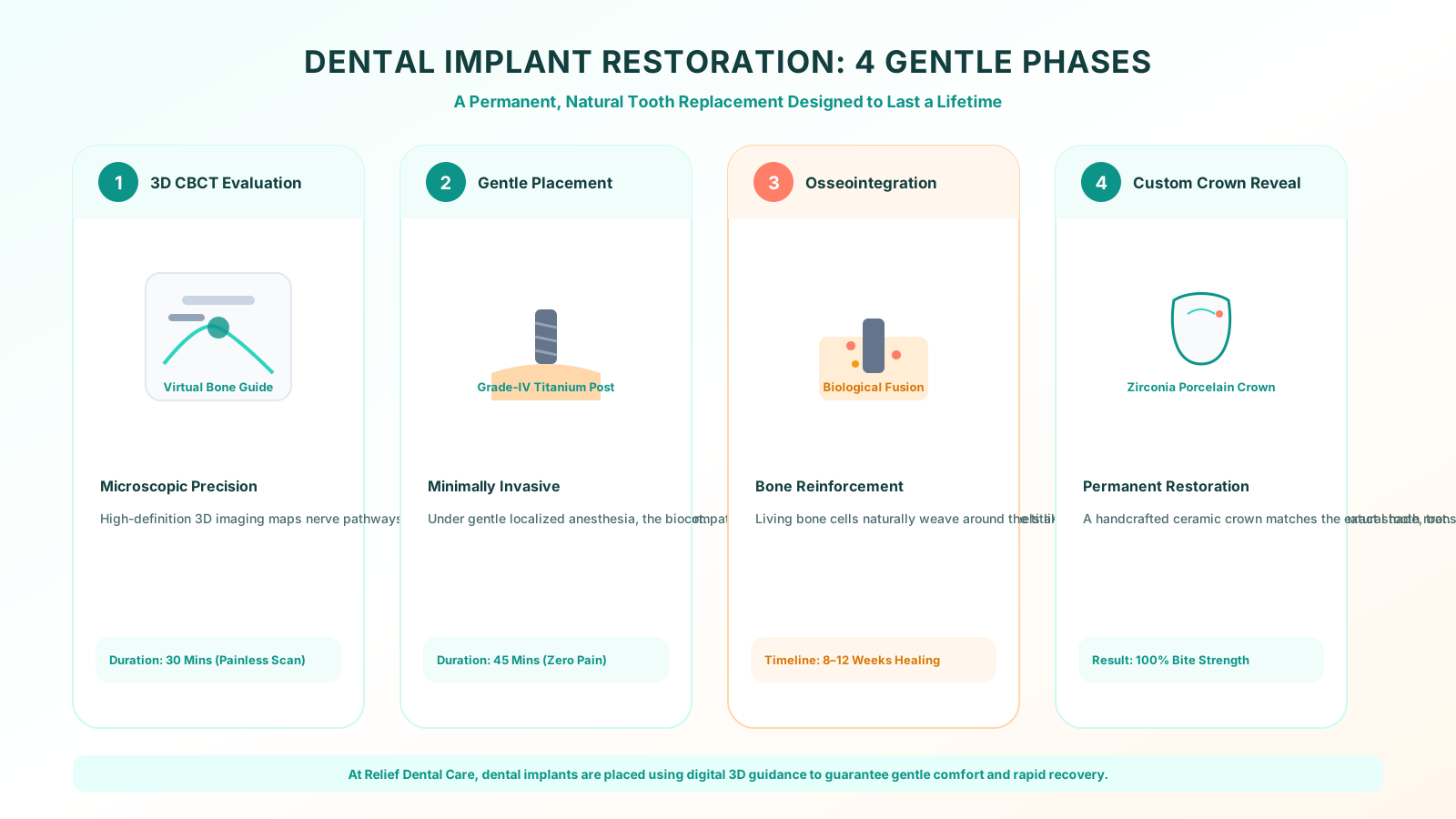
Figure 2: The 4 gentle phases of dental implant treatment: 3D CBCT digital planning, gentle localized titanium post placement, natural osseointegration healing, and the custom zirconia crown reveal.
3D CBCT Digital Planning & Scan
A quick 15-second low-dose 3D scan. Zero discomfort, zero gagging.
We take a high-resolution 3D scan of your jawbone to map bone density and nerve canals, designing your implant placement with sub-millimeter digital precision.
Gentle Implant Post Placement
Completely numb and calm. You feel gentle vibrations and water spray, zero pain.
Under localized numbing, a tiny keyhole is created in the gumline and the titanium implant post is positioned safely in the jawbone with minimal tissue disruption.
Natural Osseointegration (Healing)
Normal daily life! An aesthetic temporary tooth can be worn so you never have a gap.
Over 2 to 3 months, your living bone cells weave tightly around the titanium threads, locking the artificial root into a rock-solid biological anchor.
Custom Zirconia Crown Restoration
Delight! Gentle fitting and immediate solid bite sensation.
We secure the custom precision abutment and cement or screw-retain your handcrafted zirconia crown. Your smile and chewing are 100% restored.
Implant Formats: Single Tooth vs Full Arch
Single Tooth Digital Implant
Restores an individual missing tooth independently without touching adjacent enamel, providing permanent strength and beauty.
All-on-4 / Full-Arch Fixed Implant Bridge
Four to six strategically angled implants anchor an entire arch of permanent, non-removable teeth with immediate chewing function.
Does It Hurt? The Honest Truth About Pain
The Origin of the Myth
Because the jawbone has far fewer pain-sensing nerve fibers than the inside of a tooth, dental implant placement is remarkably painless. Most patients report taking only 1 or 2 mild pain-relief tablets on the day of the procedure and returning to work the very next morning.
Our Painless Anesthesia Approach
We administer gentle localized anesthesia to ensure the entire treatment area is profoundly numb before starting. You remain relaxed and awake throughout.
45 minutes for single implant placement.
Soft tissue heals within 3 to 5 days. Full osseointegration with jawbone takes 8 to 12 weeks before permanent crown placement.
Post-Implant Care & Osseointegration
Guidelines to protect the surgical site and promote bone integration for lifetime stability.
Immediate Priorities for the First 24 Hours
What to Eat Comfortably
- Nutritious soft foods: cool soups, curd rice, dhal khichdi, and soft paneer
- Protein-rich smoothies, fruit purees, and scrambled eggs
- Tender pasta, boiled sweet potatoes, and oatmeal
- Plenty of room-temperature water to support tissue regeneration
What to Avoid for Now
- Chewing directly over the implant site on hard or crunchy foods for the first week
- Very hot liquids, spicy chili peppers, and acidic citrus juices
- Sticky chewing gum, toffees, and hard bread crusts
- Alcohol and smoking for at least 7 days, as nicotine slows down bone osseointegration
Normal Sensations to Expect
- ✓Mild soreness around the gumline for 2 to 3 days, easily managed with prescribed analgesics
- ✓A sensation that the area feels calm and settled by day 4
- ✓Gums looking healthy and pink around the healing cap
When to Reach Out to Us
- !Severe, worsening pain after 72 hours
- !Persistent bleeding that does not stop after biting on sterile gauze
- !A healing cap feeling loose to your tongue
A Note from Dr. Pooja
Chief Dental Surgeon
“Dental implants are among the most rewarding treatments we provide because they genuinely transform lives. Seeing a patient who struggled to chew or felt embarrassed to smile bite into an apple with total confidence is deeply fulfilling. If you've been wondering whether implants are right for you, we would love to review your 3D scan and answer all your questions gently.”