
Understanding Gum Disease Treatment
A comforting, comprehensive guide to reversing bleeding gums, eliminating tartar pockets, and protecting your jawbone with gentle deep scaling and root planing.
Many adults assume that occasional gum bleeding when brushing is completely normal. In truth, bleeding gums are your body's urgent alarm signal. Just as skin bleeding anywhere else on your body would prompt immediate care, bleeding gums indicate localized bacterial inflammation known as gingivitis.
The comforting news is that gum disease in its early stages is 100% reversible. When plaque hardens into calculus (tartar) beneath the gumline, it creates microscopic pockets where bacteria multiply away from oxygen. Periodontal therapy is a gentle, specialized deep cleansing that dissolves this trapped tartar, disinfects deep root pockets, and allows your gums to firm up and reattach snugly to your teeth.
The Foundation: Gums, Bone & Ligament
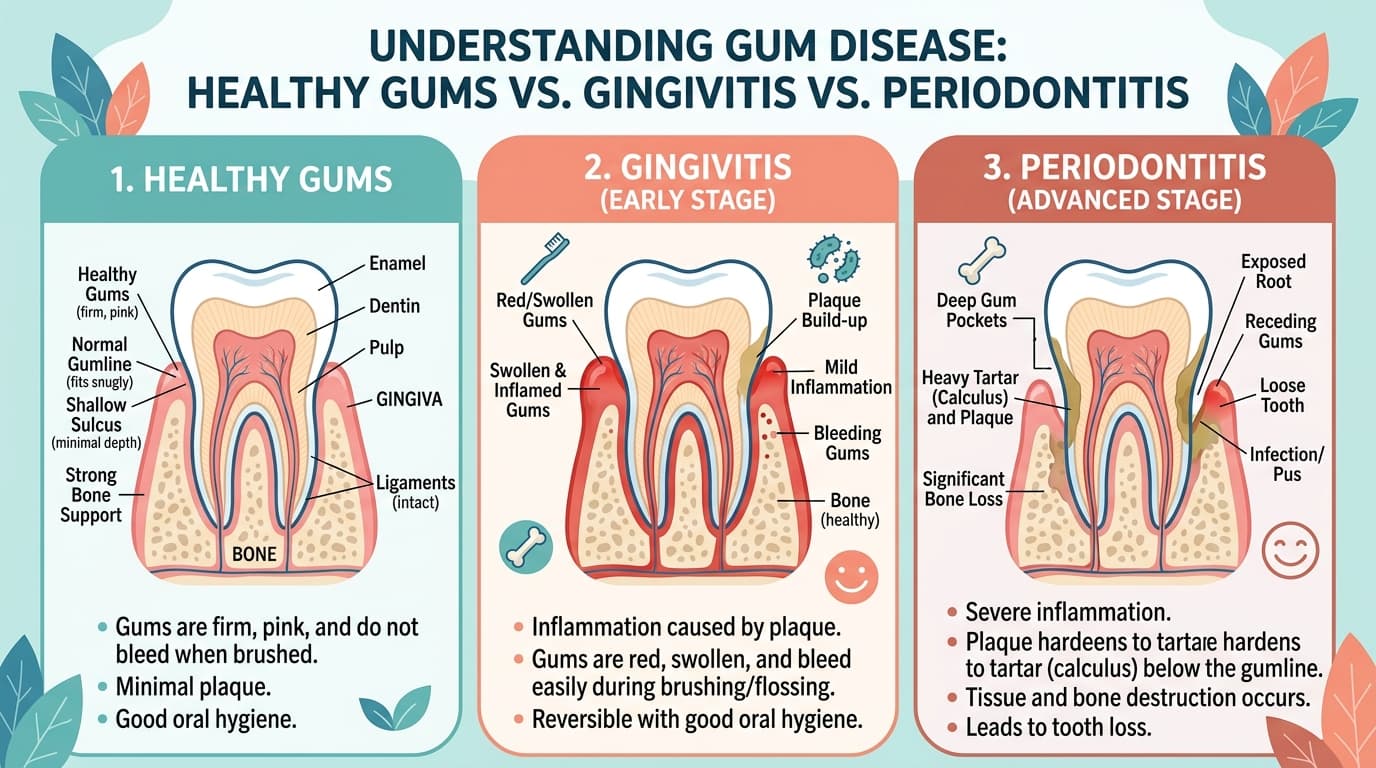
Figure 1: The progression of periodontal health: Healthy gums fit snugly with shallow sulcus. Gingivitis causes redness and bleeding. If left untreated, periodontitis forms deep pockets, causing tartar to erode underlying alveolar bone.
Gingiva (Pink Gum Tissue)
Protective SealFirm, pale-pink tissue that seals around the neck of each tooth. When bacterial toxins accumulate, the tissue swells, turns dark red, and bleeds easily.
Periodontal Ligament (PDL)
Shock-Absorbing FibersThousands of microscopic collagen fibers connecting the tooth root to the jawbone. Periodontitis breaks down these fibers, leading to tooth mobility.
Alveolar Jawbone
Structural FoundationThe bone ridge holding the tooth roots. Chronic bacterial inflammation causes bone resorption. Stopping gum disease preserves this foundation permanently.
Subgingival Calculus (Tartar)
Bacterial ReservoirHardened, rough mineral deposits hidden under the gum collar. Bacteria stick to tartar like barnacles to a ship, requiring clinical ultrasonic removal.
When Is It Time to See a Doctor?
Gum disease rarely causes sharp pain in its early and moderate stages, earning it the reputation of a silent condition. Watch for these crucial signals:
Bleeding During Brushing or Flossing
The hallmark early sign of gingivitis. The delicate blood vessels in inflamed gum tissue are engorged and burst with minor brush pressure.
Persistent Bad Breath (Halitosis) or Bad Taste
Bacteria living in deep periodontal pockets release volatile sulfur compounds that standard toothpastes and mints cannot mask.
Red, Puffy, or Tender Gums
Healthy gums are stippled and light coral pink. Bright red, rolled, or purplish swollen gums indicate an active immune battle against subgingival plaque.
Receding Gums & Teeth Looking 'Longer'
As tissue recedes from chronic inflammation, tooth roots become visible and sensitive to cold drinks and air.
Slight Tooth Looseness or Chewing Shift
Indicates advanced periodontitis where bone support has diminished. Prompt intervention can stabilize the tooth and halt further bone loss.
Why Treat Bleeding Gums Early?
Healthy gums are the biological anchor of your smile. Without solid gum and bone health, even cavity-free teeth can become loose and fall out.
Arrests bone erosion and allows gums to tighten naturally around tooth roots:
- Permanently stops gum bleeding and eliminates bad breath at the true biological source
- Flushes out anaerobic bacterial toxins living deep below the gumline
- Promotes natural reattachment of gingival fibers to clean, glassy-smooth roots
- Protects your jawbone foundation, keeping teeth firmly anchored for life
Allowing periodontal disease to progress causes irreversible structural loss:
- Bacterial toxins silently dissolve the alveolar jawbone supporting tooth roots
- Gums recede, exposing sensitive root necks and forming deep infected pockets
- Teeth become mobile, shift when chewing, and eventually require extraction
- Chronic gum inflammation increases systemic cardiovascular and diabetes risks
When gum disease progresses from gingivitis to periodontitis, the alveolar bone holding the teeth begins to dissolve permanently. Once lost, vertical jawbone cannot easily be grown back, making early intervention essential.
What Happens During the Procedure?
Modern periodontal care (Scaling and Root Planing) is thorough, gentle, and designed around maximum patient comfort.
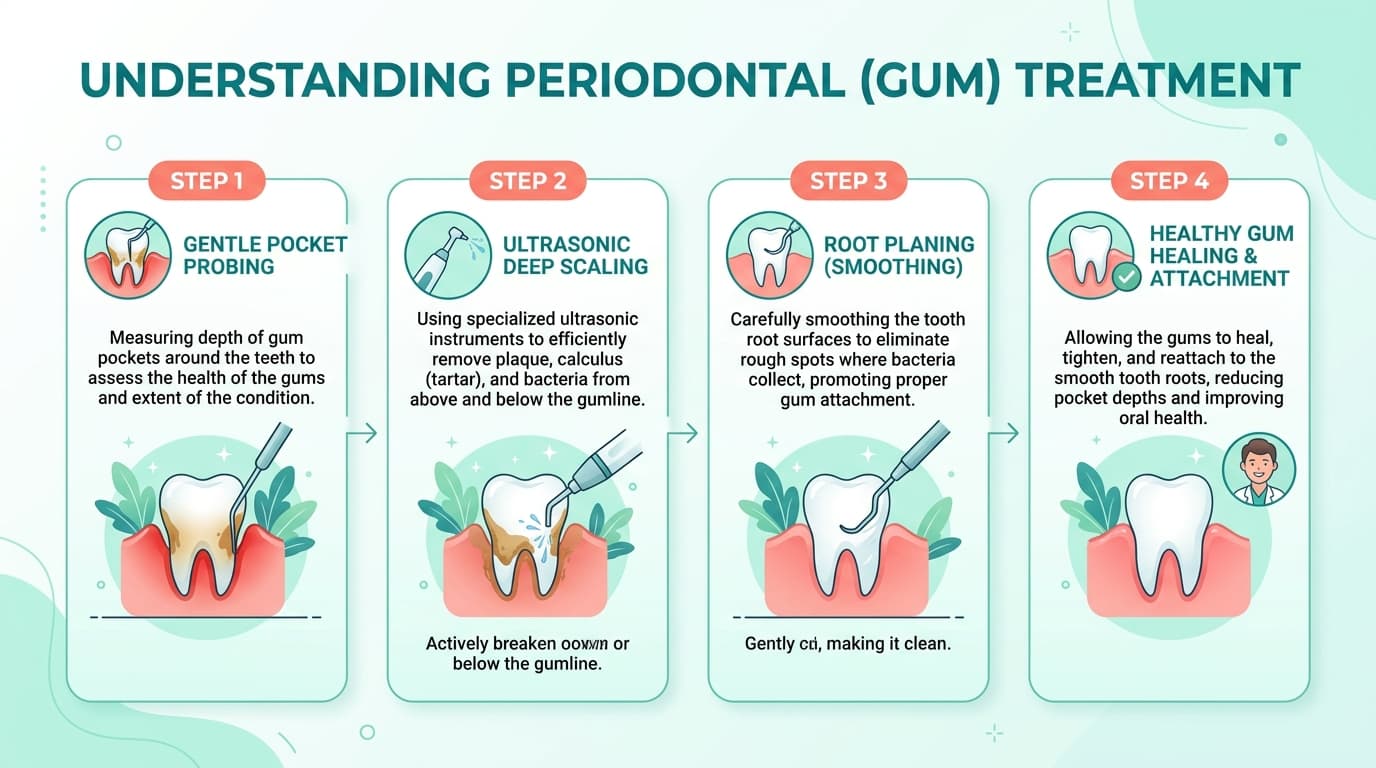
Figure 2: The 4 gentle steps of periodontal treatment: Pocket probing assessment, ultrasonic subgingival scaling, precision root planing (smoothing), and natural gum tissue healing.
Gentle Pocket Probing & Mapping
Mild light pressure as a tiny blunt ruler measures gum depth. Completely gentle.
We measure the pocket depth around each tooth (1-3mm is healthy, 4mm+ indicates periodontal pocketing) to create an exact treatment roadmap.
Ultrasonic Deep Subgingival Scaling
Cool water mist and soothing vibration. Comfort gel ensures you feel zero sharpness.
Specialized fine ultrasonic tips glide below the gumline to shatter hardened calculus deposits and flush out anaerobic bacterial colonies.
Root Planing & Micro-Smoothing
Smooth, rhythmic cleansing motions. Completely numb and relaxing.
We meticulously smooth the rough root surfaces of the tooth. Glass-smooth roots prevent bacteria from clinging and provide a clean bed for gums to reattach.
Antibacterial Flush & Healing Reattachment
Pleasant, clean herbal rinse sensation. Instant feeling of freshness and relief.
Pockets are irrigated with gentle antimicrobial solutions. Over the next 1–2 weeks, gum tissues shrink, stop bleeding, and firmly grip the clean roots.
Periodontal Protocols: Preventative vs Deep Care
Full-Mouth Ultrasonic Periodontal Debridement
Complete ultrasonic decontamination of all four quadrants with antimicrobial irrigation and homecare guidance.
Quadrant Deep Scaling & Root Planing (S&RP)
Dividing treatment into two comfortable sessions allows targeted numbing on one side, ensuring thorough root planing with zero fatigue.
Does It Hurt? The Honest Truth About Pain
The Origin of the Myth
Deep scaling and root planing has a reputation of being intense, but modern dentistry has completely transformed this experience. With topical numbing gels and precise local anesthesia, you will not feel sharp discomfort during the procedure. Patients often comment that the cool water flushing feels deeply satisfying.
Our Painless Anesthesia Approach
We apply topical anesthetic gel to delicate gum pockets first, followed by computerized local numbing where deep root work is required. Your comfort is our top priority.
40 to 60 minutes per session.
Most patients feel immediate relief from gum heaviness. Mild gum tenderness may last for 24–48 hours, with bleeding disappearing completely within 5–7 days of proper home care.
Post-Deep Cleaning Care & Healing
Simple steps to soothe tender gums, encourage reattachment, and eliminate bleeding permanently.
Immediate Priorities for the First 24 Hours
What to Eat Comfortably
- Warm, soothing soups, lentil dhal, and soft rice khichdi
- Soft scrambled eggs, paneer, and steamed vegetables
- Smooth fruit purees, yogurt, and tender avocado
- Lukewarm green tea or water to maintain oral hydration
What to Avoid for Now
- Sharp foods like tortilla chips, crackers, and crusty breads that can poke tender gums
- Tiny seeds (sesame, chia, berries) that can get wedged into healing gum pockets
- Very spicy chili sauces or scalding hot liquids
- Chewing hard candies or sticky sweets
Normal Sensations to Expect
- ✓A sensation that teeth feel slightly spaced or 'longer' as swollen puffiness subsides (this is healthy)
- ✓Mild sensitivity to cold water for a few days, easily managed with sensitive toothpaste
- ✓Gums looking pinker and feeling firmer within 3 to 5 days
When to Reach Out to Us
- !Continued spontaneous gum bleeding after 48 hours
- !Throbbing localized pain that does not respond to mild pain relievers
- !A new swelling or tender bubble forming on the gum
A Note from Dr. Pooja
Chief Dental Surgeon
“Gum disease is not a personal failure — it is a common biological imbalance between bacteria and your body's immune response. You do not have to live with bleeding gums or fear of losing your teeth. With gentle periodontal therapy and simple daily habits, we can restore your gums to firm, healthy, pink vitality.”