
Understanding Root Canal Treatment
A gentle, calming guide to understanding how modern rotary endodontics relieves tooth pain, preserves your natural tooth, and keeps your smile intact without discomfort.
Hearing the words 'root canal' often makes people tense up. For decades, outdated movie tropes and old dental tales created the false perception that root canals are painful. In modern dentistry, the exact opposite is true: the infection inside your tooth is what causes pain; the root canal is the gentle procedure that ends it.
Think of a root canal as an intricate, restorative cleaning. Instead of extracting and losing a tooth that took decades to grow, we simply remove the irritated nerve tissue from deep within, sanitize the microscopic canals, seal them safely, and place a protective natural crown. Your real tooth stays rooted in your jawbone, looking, chewing, and feeling completely normal.
What Lies Beneath: Inside Your Tooth
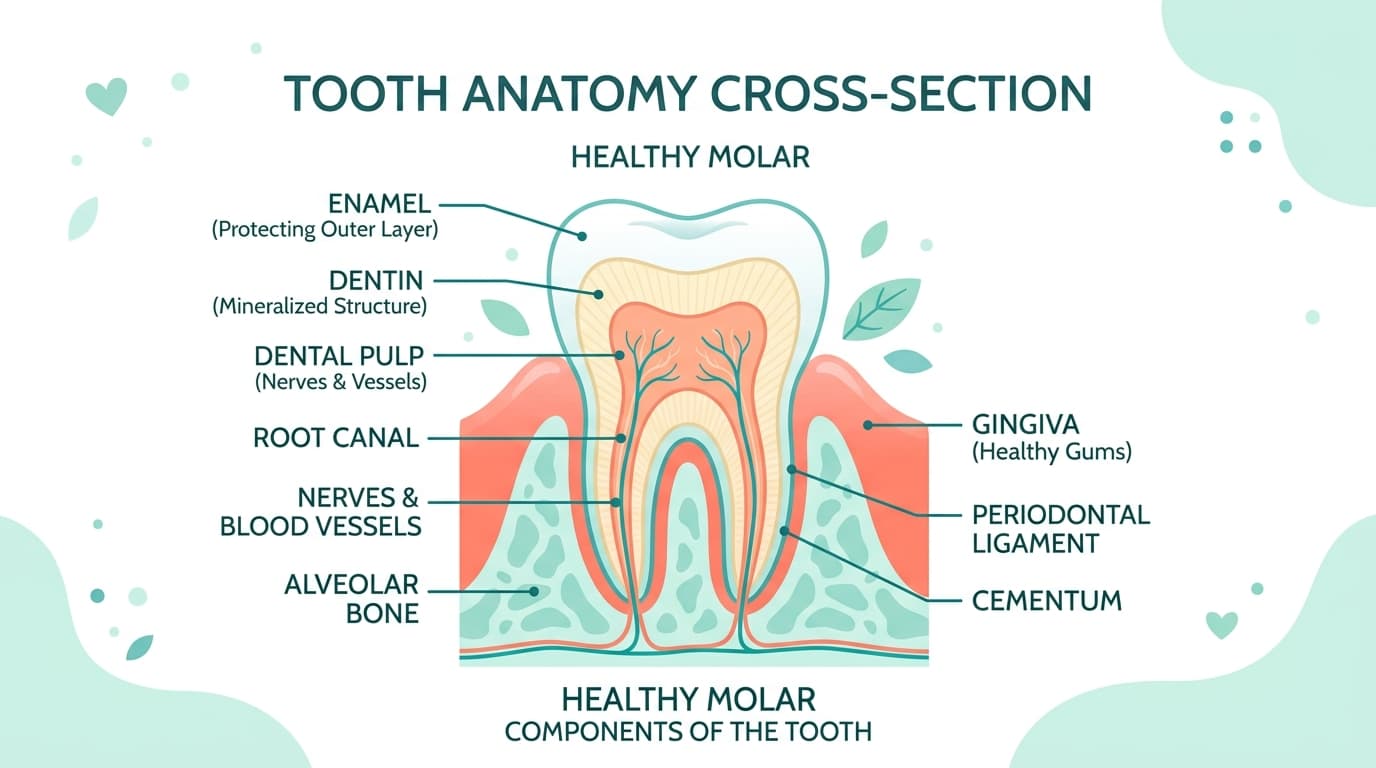
Figure 1: Cross-section anatomy of a tooth: The hard enamel and dentin protect the soft dental pulp inside. When deep decay or a hairline crack penetrates into the pulp chamber, nerves become inflamed.
Enamel
Outer ShieldThe hardest mineral substance in the human body. It protects the tooth from daily chewing forces, but once eroded by deep decay or chips, bacteria can pass deeper.
Dentin
Shock-Absorbing CoreA softer, microscopic tube-filled layer beneath enamel that transmits temperature sensations to the nerve center.
Dental Pulp & Canals
Living Nerve & Blood VesselsThe delicate center containing nerves and blood vessels. When bacteria reach this chamber, swelling occurs within the rigid tooth walls, creating the throbbing sensation we know as toothache.
Root & Periodontal Ligament
Natural FoundationAnchors the tooth securely to your jawbone. Saving this natural foundation is always healthier for your bite alignment than removing the tooth.
When Is It Time to See a Doctor?
Tooth pain is your body's communication system. Catching nerve inflammation early means faster relief, simpler treatment, and saving 100% of your natural tooth structure.
Lingering Hot & Cold Sensitivity
If temperature sensitivity stings and lingers for more than 15–30 seconds after the drink is swallowed, it indicates the inner nerve is irritated rather than just enamel wear.
Spontaneous or Throbbing Ache
A deep, rhythmic throb that wakes you up or worsens when your head rests on a pillow. This occurs because increased blood pressure reaches the inflamed pulp chamber.
Sharp Discomfort When Biting
Pain when chewing food indicates the infection may have spread slightly to the microscopic ligament anchoring the tooth tip in the jawbone.
Small Gum Pimple or Swelling
Often called a gum fistula, this represents a localized release point for trapped pressure. Even if the tooth pain suddenly stops, this requires immediate professional cleansing.
Tooth Darkening or Discoloration
A tooth that has undergone trauma or nerve necrosis can slowly change color internally as blood supply decreases, even without sharp pain.
Why Save Your Natural Tooth?
Patients often ask: 'Can I just have the tooth pulled out instead?' Here is why world-class endodontics prioritizes saving your natural tooth whenever clinically viable.
Preserving your biological tooth root is universally recommended by endodontists worldwide:
- Keeps your own natural tooth root firmly bonded in your jawbone
- Single appointment or two short sessions with immediate return to daily life
- Zero surgical bone grafting or lengthy 3-to-6 month implant osseointegration wait
- Natural sensation, texture recognition, and temperature feel while chewing
While extraction may seem like a quick fix, it triggers long-term dental consequences:
- Leaves an empty gap causing neighboring teeth to drift and misalign your bite
- Gradual bone resorption occurs under the gumline where the tooth root was lost
- Subsequent replacement (dental implant or bridge) requires significantly more appointments and higher total cost
- Can alter your facial symmetry and natural smile aesthetics over the years
Delaying treatment when a pulp infection is present allows bacteria to travel past the root tip into the jawbone, resulting in painful dental abscesses, systemic inflammation, and irreversible damage that may eventually force an emergency extraction.
What Happens During the Procedure?
Knowing what happens step-by-step is the greatest antidote to anxiety. Modern rotary root canal therapy is smooth, quiet, and completely numb from start to finish.
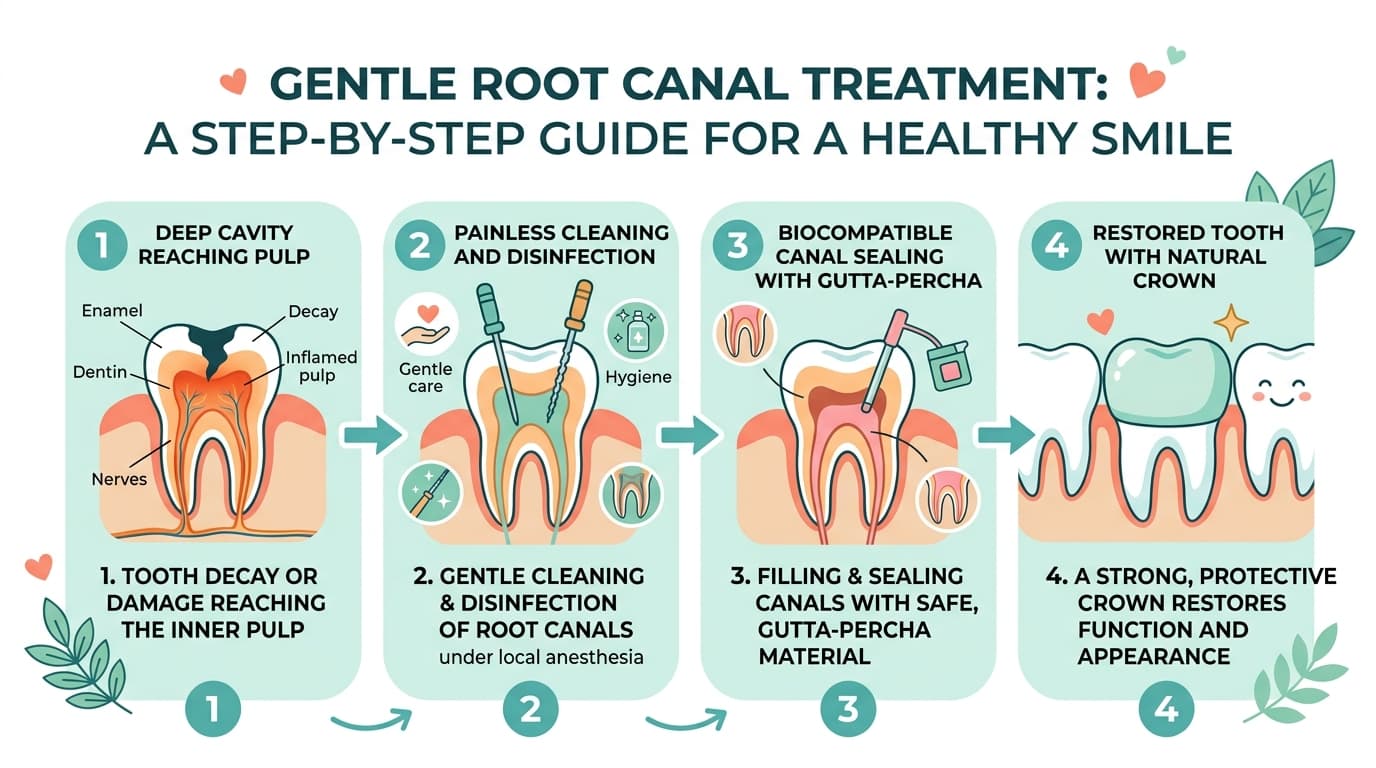
Figure 2: The 4 gentle steps of modern rotary root canal therapy: From gentle numbing to microscopic disinfection, biocompatible sealing, and a protective tooth-colored crown.
Gentle Numbing & Isolation
A mild surface numbing gel followed by localized anesthetic. You only feel pressure, zero pain.
We gently numb the tooth and surrounding area completely. A comfortable protective rubber sheet (dental dam) is placed to keep the tooth dry, sterile, and isolate it from saliva.
Painless Cleaning & Disinfection
A subtle vibration and gentle water rinsing sound. No sharp sensations.
Through a microscopic access opening, flexible computerized nickel-titanium rotary files smoothly cleanse and reshape the inflamed canals while sterile antibacterial irrigants wash away all bacteria.
Hermetic Canal Sealing
Quiet, relaxing finish. You are simply resting comfortably in the chair.
The hollow, sterilized canals are filled with Gutta-Percha — a natural, biocompatible rubber material — and sealed with antimicrobial resin to ensure bacteria can never re-enter.
Protective Crown Placement
Gentle fitting and smooth polish. Immediate chewing stability.
Because a treated tooth no longer receives internal blood supply, a custom porcelain or zirconia crown is crafted to cover and reinforce the tooth structure against biting fractures.
Treatment Options: Single-Sitting vs Multi-Sitting
Single-Sitting Rotary Root Canal
Using high-precision rotary motors and apex locators, modern cases can be completed comfortably in a single sitting, minimizing visits and clinic travel.
Multi-Sitting Therapeutic Root Canal
An antibacterial medicinal dressing (such as calcium hydroxide) is placed inside the canals between visits to safely soothe deep tissue inflammation before permanent sealing.
Does It Hurt? The Honest Truth About Pain
The Origin of the Myth
With modern computerized local anesthetics and flexible rotary instruments, getting a root canal feels virtually identical to receiving a routine dental filling. Most patients report feeling instant relief from the deep ache that brought them to the clinic.
Our Painless Anesthesia Approach
We begin with a pleasant topical numbing gel before any localized anesthetic is delivered, ensuring your comfort from the very first second. The tooth remains 100% numb throughout the procedure.
45 to 60 minutes for a complete single-sitting procedure.
Most patients resume normal work and activities on the very same day. Mild sensitivity when biting may persist for 24 to 48 hours as the surrounding ligament heals, easily managed with simple over-the-counter pain relief.
Post-Treatment Care & Healing Tips
Simple steps you can take at home to ensure smooth, fast, and comfortable healing.
Immediate Priorities for the First 24 Hours
What to Eat Comfortably
- Warm or room-temperature soups, dhal, and khichdi
- Soft paneer, steamed vegetables, and ripe bananas
- Yogurt, smoothies, and soft oatmeal
- Warm herbal teas (not scalding hot)
What to Avoid for Now
- Hard nuts, crusty bread, popcorn, and ice cubes
- Sticky candies, chewing gum, and caramel
- Extremely spicy or acidic condiments
- Chewing directly on a temporary filling before the crown is placed
Normal Sensations to Expect
- ✓Mild tenderness around the gumline for 1 to 3 days
- ✓A sensation that the tooth feels slightly 'different' or tall for 48 hours
- ✓Temporary jaw muscle tiredness from keeping your mouth open during the visit
When to Reach Out to Us
- !Visible swelling develops on the cheek or inside the gumline
- !Severe, sharp pain that does not respond to standard pain medication
- !A temporary filling or temporary crown becomes completely dislodged
- !Your bite feels uneven or hits premature when chewing
A Note from Dr. Pooja
Chief Dental Surgeon
“Every day, I meet patients who postponed treatment for months out of fear, only to tell me after the procedure: 'I can't believe I waited so long — that was completely painless!' Your comfort and natural smile are our priority. If you are experiencing toothache or have questions about whether your tooth can be saved, we are always here for a warm, pressure-free consultation.”